
Provocation as Prophecy
Duchamp at MoMA

for Matthew Jocelyn
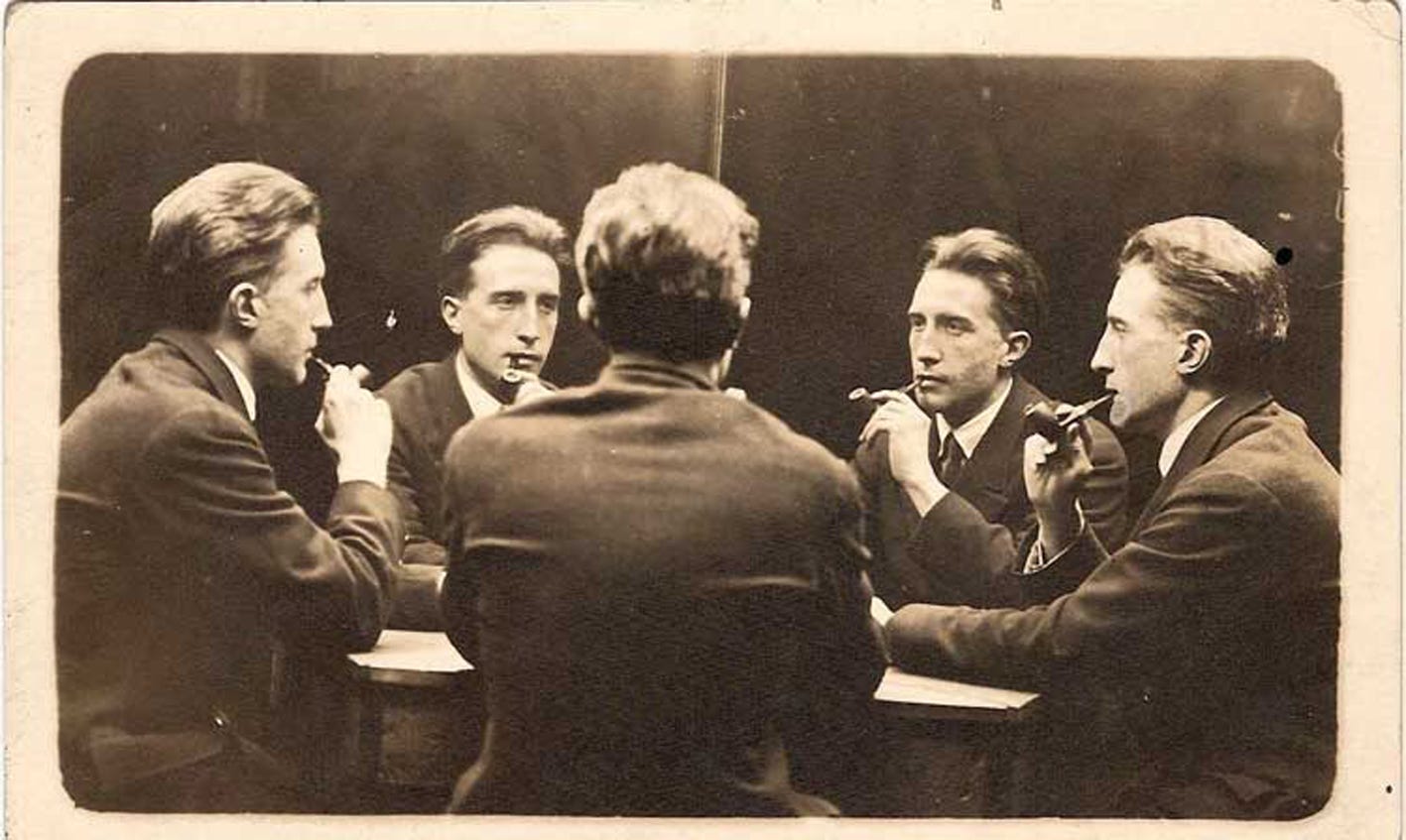
Marcel Duchamp was an octopus — his fingerprints are all over the art world. Few are the roles in the sector that he did not perform: painter, illustrator, curator, dealer, advisor, theorist, archivist and conservator of his own work, museum founder and trustee, performer, collaborator, art star. Within his practice he painted figuratively and abstractly, drew in pencil and in ink, printed, constructed, conceived, designed, and installed — and most famously, produced sculptures without sculpting. Perhaps out of deference to his friend Man Ray, he let him do the photographing and they collaborated on a film: the anagrammatic Anémic Cinéma. It was signed by Duchamp’s alter ego, the punning Rrose Sélavy — Eros, c’est la vie — his practice being too wide-ranging for a single identity and gender.
Duchamp is a direct or indirect ancestor of Neo-Dada, Arte Povera, Fluxus, op and pop, kinetic art, conceptual art, performance art, mail art, the Situationist International, institutional critique, appropriation, and relational aesthetics. He attempted to take taste out of the equation by declaring it “the enemy of art” and made works on which the old aristocratic faculty could have no purchase. A great liberator, he changed the job description of the fine artist from cultivated craftsman to public intellectual. Other cultural heroes have made art history; Duchamp is among the few to have changed it.
But this is where the standard account requires interrogation. The retroactive lineage — Duchamp as patriarch of everything — risks mistaking outcome for intention. Did he prophesy contemporary art, or did contemporary art, seeking legitimacy for its own radical moves, conscript him as ancestor? The question is important because the answer changes what we think provocation does. If Duchamp was genuinely prophetic, his provocations expressed a clear understanding of where art was headed. If he was conscripted, then provocation operates differently: it creates wounds in the cultural record that every subsequent generation reopens to find what it needs. Both readings are flattering to Duchamp. Only the second is truly extraordinary — and closer to the truth.
MoMA’s current retrospective — 300 items presented chronologically — offers the evidence for adjudication. What distinguishes it from other Duchamp retrospectives is its pedagogical ambition: the museum presents itself as Duchamp’s opponent in a subliminal game of chess, following his every move in the order it was made. Viewers can trace, if not the logic of individual works, at least the sequential logic of a career, perhaps modernism’s most consequential. MoMA earns its victory demonstrating that the institution Duchamp spent a lifetime provoking was also the one he deliberately cultivated. But the chess metaphor cuts deeper: in chess, the opening determines everything that follows. Duchamp’s opening moves were not ordinary provocations. They were interventions that made his eventual canonisation very nearly inevitable.
The catalogue’s main essay — Duchamp and the Museum, signed by all three curators, Matthew Affron, Michelle Kuo, and Ann Temkin — documents this with admirable precision. Duchamp didn’t merely antagonise the institution; he understood the difference between the conservatives who ran art museums and the powerful cultural instrument that would survive them. He co-founded one of his own, the Société Anonyme, a New York forerunner of MoMA that he established with his patron Katherine Dreier and Man Ray. And he curated his collectors so methodically that the strategy should rank among his core achievements.
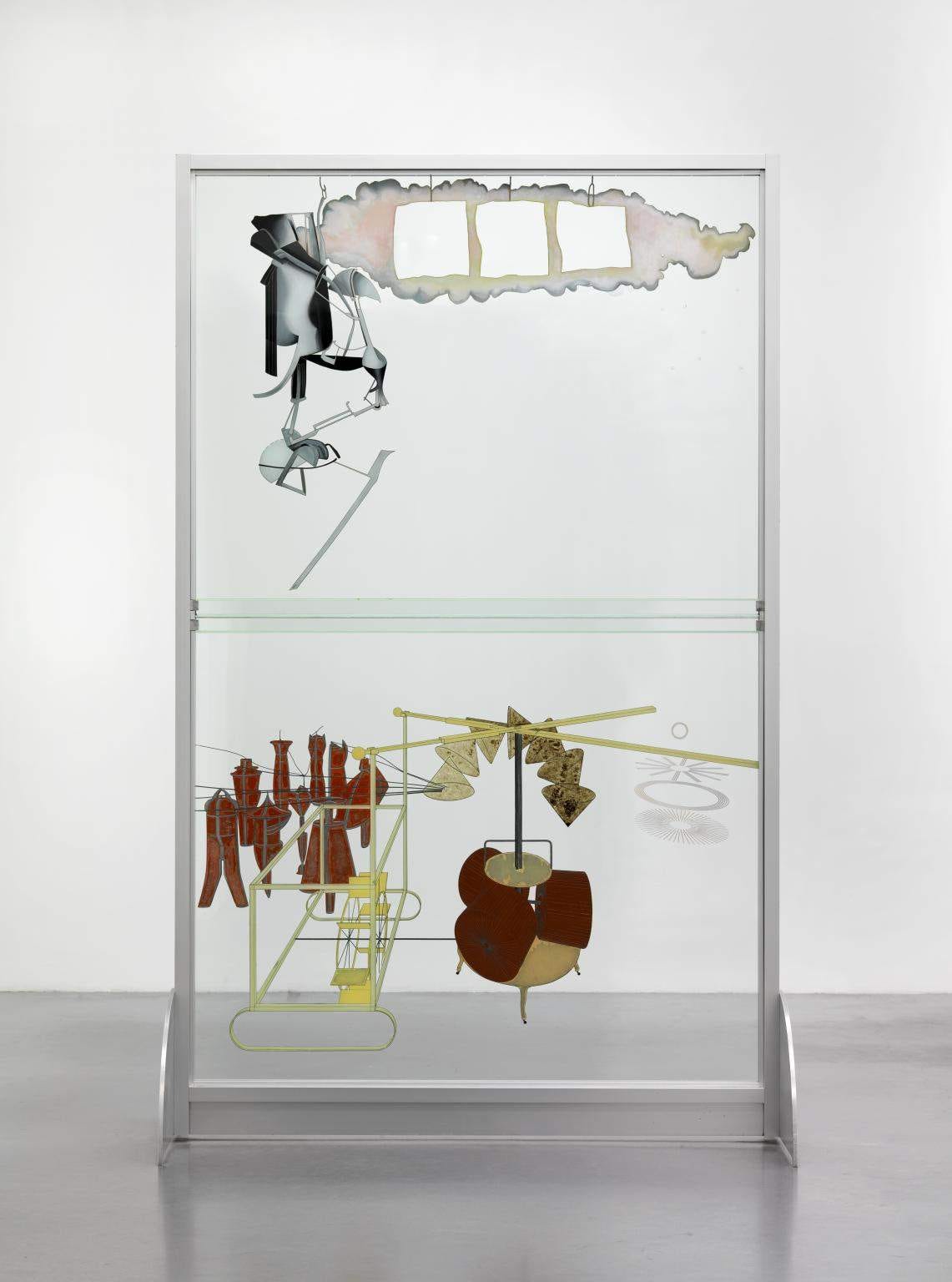
Over the decade Duchamp worked on it, Walter and Louise Arensberg made regular payments towards ownership of The Bride Stripped Bare by Her Bachelors, Even — aka the “Large Glass” — ensuring that his magnum opus would be housed in an art museum. To that end, Duchamp spent many years negotiating with museum directors on behalf of the Arensbergs to find an appropriate home for their collection: an important group of modernist works, significant Indigenous art from the Americas, and much of Duchamp’s corpus. Curating the posthumous survey of Florine Stettheimer’s paintings for MoMA in 1946 was an act of friendship and solidarity but it also shows that Duchamp understood how museums worked and what they were for — he moved through them with confidence. In this light, “institutional critique” is only half the story. The other half is institutional command.
What makes Duchamp’s provocations prophetic rather than merely disruptive is precisely this doubling: he understood that the institution he consistently taunted with dares — to his very last work — was also his most reliable ally. The rejected work, properly documented and contextualised, becomes more valuable than the accepted one — not despite rejection but because of it. Provocation, in this schema, is not a failure to participate in the art system but a more sophisticated participation in it, one that generates cultural surplus through controversy and converts controversy into canonical status.
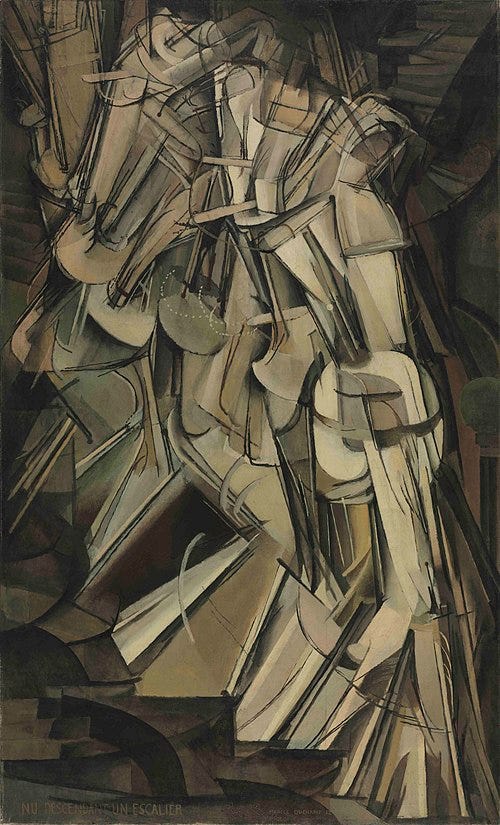
The career demonstrates the mechanism twice in quick succession. Duchamp withdrew Nude Descending a Staircase, No. 2 from the 1912 Salon des Indépendants in Paris when the hanging committee expressed displeasure — they found it too narrative and comic for serious Cubism. The objection was not wrong. Retaining storytelling and humour within abstraction is the signal originality of Duchamp’s final easel paintings; they were something else, neither quite Cubism nor caricature. The rejection accomplished more than acceptance would have. A defiant Duchamp submitted the withdrawn picture to the Armory Show in New York the following year, where it caused a critical commotion extensively documented in the retrospective. Mocked in the American press, the picture’s notoriety vindicated him among the Parisian avant-garde and raised his profile dramatically, launching his career in earnest on both sides of the Atlantic.
Mulling the episode, Duchamp recognised something systemic: rejection-as-notoriety is reproducible. In 1917, under the pseudonym R. Mutt, he submitted Fountain — a urinal lying on its back — to another nominally unjuried exhibition in New York. Right on schedule, the work was rejected by the organisation’s president, William Glackens, a prominent Ashcan School painter who didn’t get the joke. As Duchamp and Walter Arensberg were both officers of the Society of Independent Artists, the organiser of the show, their noisy resignation to protest the exclusion of Mr. Mutt did not go unnoticed. It ignited a discourse around Fountain that lives on.
Here the retrospective’s documentation is both rich and carefully hedged. Duchamp recounted in a letter to his sister Suzanne that a “female friend” — possibly Baroness Elsa von Freytag-Loringhoven, a Dadaist — had submitted the work of the fictitious Richard Mutt, whose address was given as 110 West 88th Street, actually belonging to Louise Norton, one of Duchamp’s admirers and collaborators who was in on the prank. Some contend that the authorship of Fountain belongs to the Baroness, whose own practice had once involved sanitary hardware and thus a documented interest in the transgressive potential of plumbing.
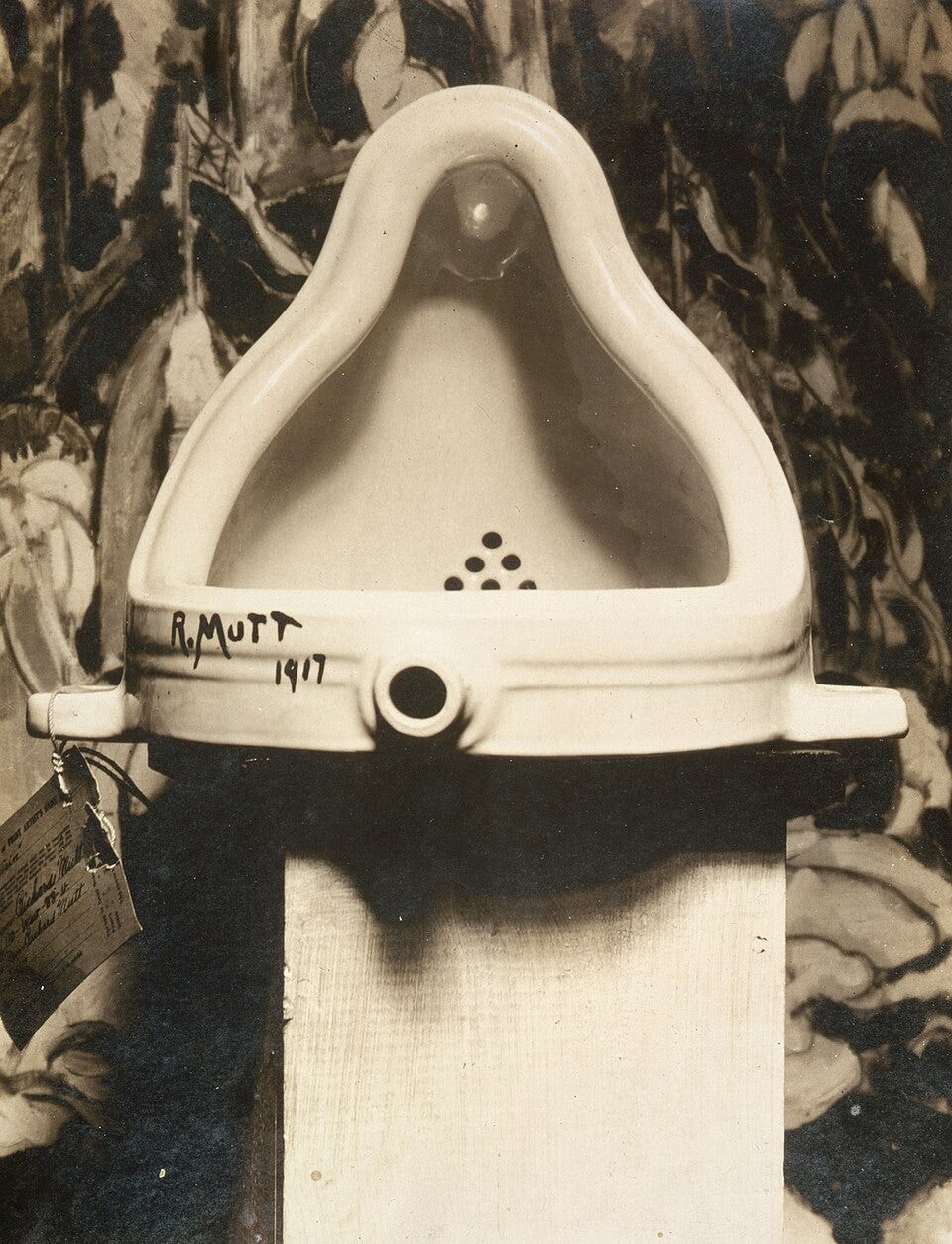
The argument deserves consideration rather than dismissal, but there are substantive grounds for resistance. Freytag-Loringhoven’s practice had an expressionist bent that she brought with her from Germany, and it was autobiographical — her work used found materials as emotional self-extension, as bodily assertion, not as conceptual proposition. Fountain is categorically different: a systematic removal of artistic affect, an object deliberately selected for what Duchamp called its “aesthetic indifference.” The work belongs to a sequence — the sixth or seventh readymade, depending on how you count them — that constitutes a coherent philosophical program of which the Baroness had no equivalent. But collaboration fits the origin story; the allusions of the pseudonymous signature “R. Mutt” accommodate it: Mutt and Jeff (the comic strip), the J.L. Mott Iron Works (a maker of urinals), “our mutt” the no-breed offspring of an absurdist interaction. My favourite is Armut, the German word for poverty, which places a German interlocutor at the conceptual table and is consistent with the bilingual wordplay Duchamp loved. It is easy to imagine an evening of laughter over the scheme’s accumulating details. But a collaborative occasion does not require equivalence of authorship. To read Fountain as evidence of patriarchal appropriation is to interpret a systematic philosophical program through the lens of a single incident, flattening the Baroness along with Duchamp.
Armut repays continued attention. The notion of poverty directs us to Duchamp’s actual circumstances, which were more precarious than the legend of the indolent artist-intellectual typically suggests. His father Eugène, a notary and mayor of a Norman village, supported three avant-garde artists, his sons, with regular stipends — but not his daughter Suzanne, a Cubist painter, which speaks pointedly of the generosity and its limits. Once Marcel left home, however, he traveled frequently and sat out the First World War in New York, where a wartime allowance in francs did not go far. By the time Eugène died in 1925, what remained of the inheritance after the lifetime withdrawals was modest. Duchamp spent his portion on materials, a film camera, and an attempt to break the bank at Monte Carlo.
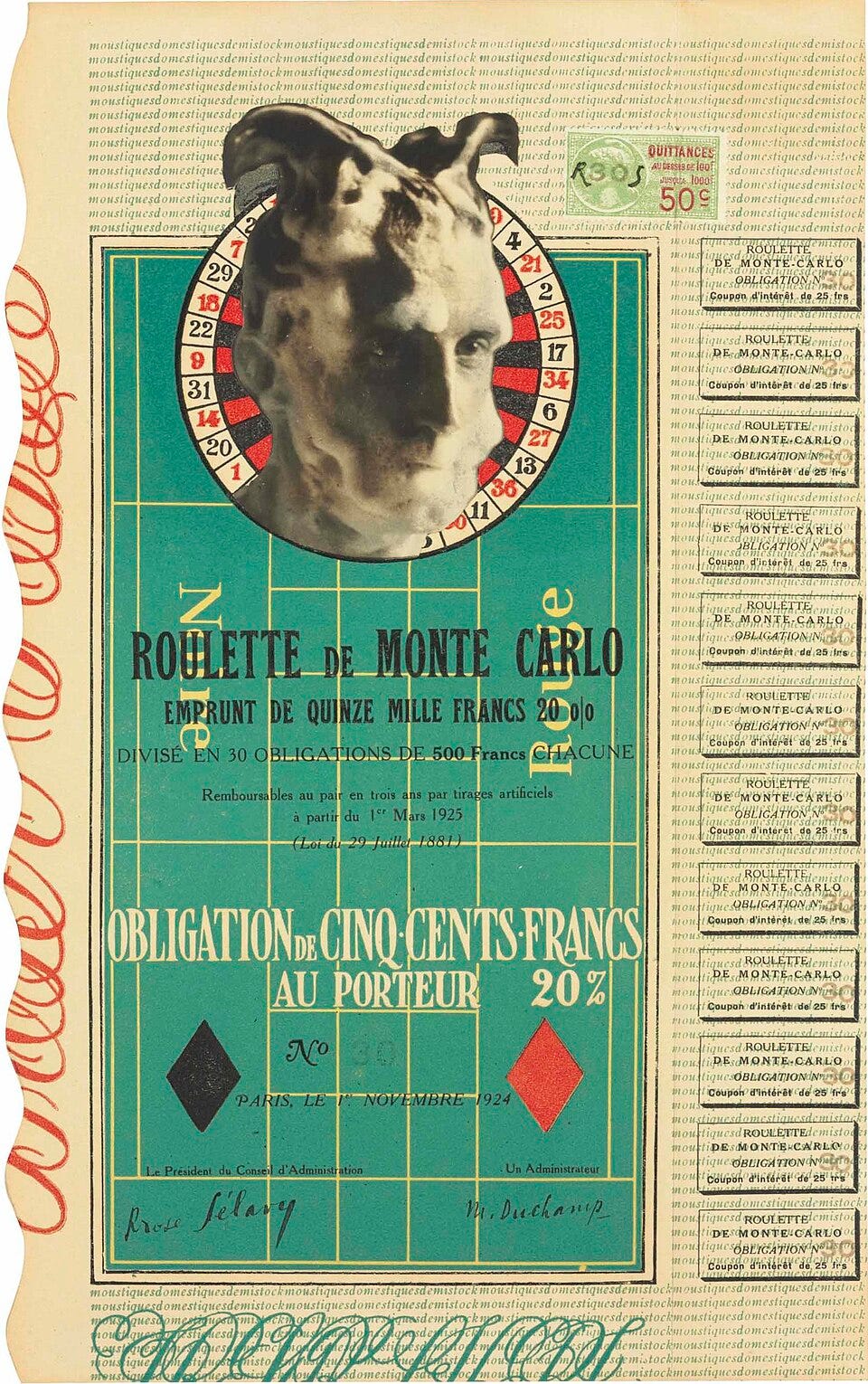
The casino episode is instructive not just as biographical colour but as conceptual prescience. The year before he had an inheritance to gamble, Duchamp devised an investment scheme — the Monte Carlo Bond — to raise funds for the “scientific system” he invented to win at roulette. He had loved mathematics as a child, but the limited appeal of the mock financial instrument hints at the result of his mathematical assault on chance. As a work of art, though, Monte Carlo Bond would become a prototype for conceptualism, arriving four decades ahead of the movement it heralds. Here is the prophetic mechanism in miniature: a practical failure generating an artistic legacy that would have been impossible to design in advance.
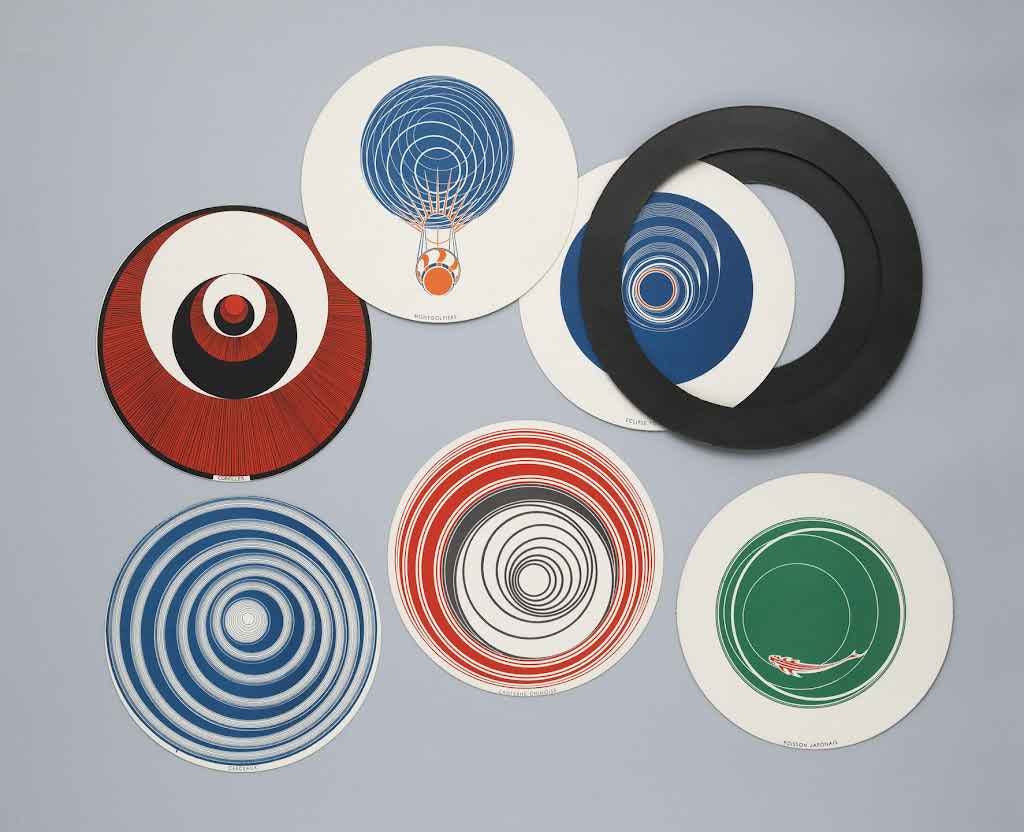
Programmed failure as a strategy may itself be a retrospective narrative, imposed on events whose outcome was not as certain at the time as the legend suggests. The Rotoreliefs of 1935, for example, produced over a decade after he claimed to have abandoned making art, were a legitimate attempt at a product line, “playtoys” for turntables that won him an honourable mention at an inventor’s fair in France. They did not pan out commercially. What matters isn’t whether Duchamp planned each failure but that the failures became the work. The mythology of intentionality is part of his achievement.
Biographer Calvin Tomkins, who knew Duchamp, described his typical meal: a plate of buttered pasta and a glass of red wine. He quotes William Copley who visited the artist on West 14th Street where he lived and/or worked on and off for over two decades: “It was a medium-sized room. There was a table with a chess board, one chair, and a kind of packing crate on the other side to sit on, and I guess a bed of some kind in the corner… There were two nails in the wall, with a piece of string hanging down from one. And that was all.”
To support himself, Duchamp taught French to wealthy women — Dreier, Norton, and the Stettheimer sisters whose salon, like the Arensbergs’, sustained him socially. Both of his wives came from money, though he was single — if famously not celibate — for the twenty-six years between marriages. In his case, Armut appears to have been a chronic condition. None of this is incidental to the work: his intellectual ambitions required insulation from commercial pressure. He organised his spartan life in accordance with these values. Yet Duchamp understood perfectly how the art market worked. He bought, sold, and brokered on behalf of others, notably Brancusi, and advised Peggy Guggenheim on what to buy. But he wanted something other than sales for himself.
The readymades are the engine of everything. They systematically stripped art of its ancient attributes — mimesis, meaning, skill, sensuality, luxury — to re-empower it as an instrument of pure intellection, freed of manual labour and what Duchamp called the “retinal” hegemony. The readymade doesn’t represent a thing; it is the thing, deliberately chosen for being inaesthetic. Just as an artist chooses a subject, a palette, a scale, and a style, why not choose an object that already exists and declare it art? Isn’t it the same act?
Duchamp made choice the irreducible artistic operation, relocating the work of art from the made object to the act of designation. In doing so, he mounted a prospective counter-argument to Walter Benjamin’s The Work of Art in the Age of Mechanical Reproduction, demonstrating that aura survives the ontological impoverishment of the artwork because it resided in the artist all along, not in the object, nor in its sociology. Even the mechanically reproduced object can be a souvenir of artistic thought and personal charisma — a thing made auratic by the artist’s celebrity. Aura is biographical.
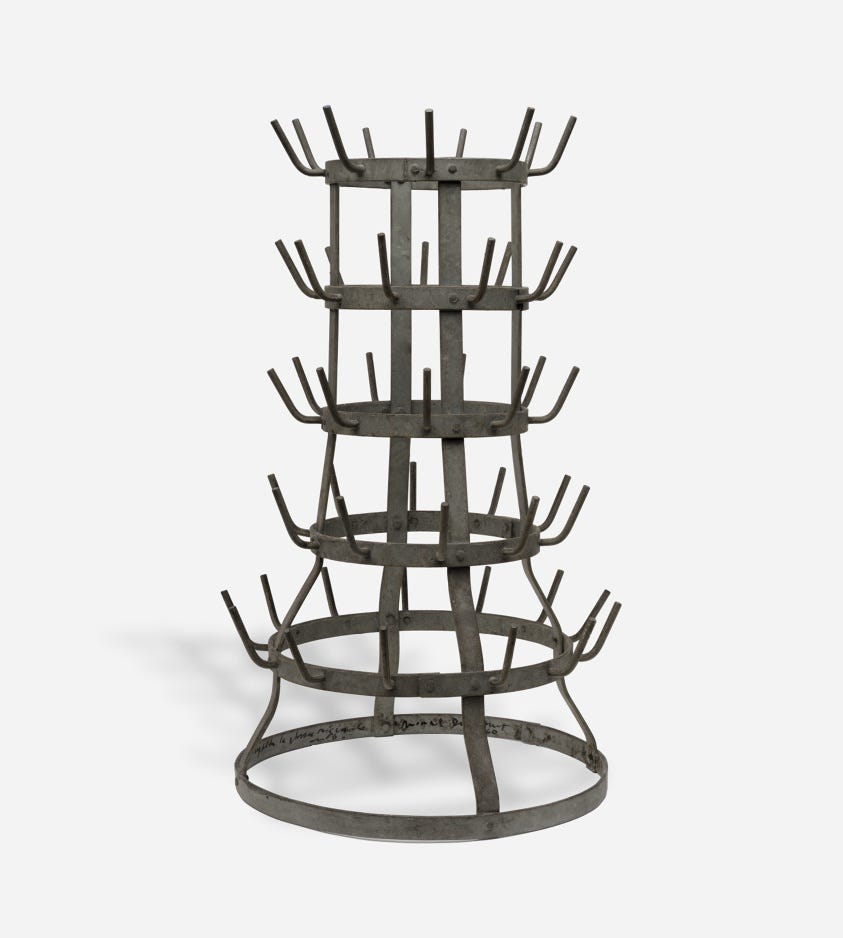
An unexpected parallel deepens the argument. Abbot Suger, the twelfth-century founding patron of the Gothic style, answered monastic critics of his material extravagance with a proposition for the ages: that which is signified pleases more than that which signifies. Suger’s argument was for splendour — the golden candlesticks and jewelled reliquaries pointed beyond themselves to the divine, and the more magnificent the pointer, the more powerfully it discharged its transcendent function. Duchamp makes the identical claim by opposite means. His impoverishment of the art object — the urinal, the snow shovel, the bottle rack — insists that the signified (the thought, the designation, the conceptual proposition) takes precedence over the signifier, which must be emptied of seductive content precisely to reveal the signified. Suger fills the sign to breaking point; Duchamp evacuates it completely. That Marcel Duchamp, who called retinal pleasure and taste the enemies of art, should mirror the patron aesthete of Gothic excess is either the deepest irony in art history or proof that the opposing sensibilities — less and more — ask the same question.
The prophetic dimension is sharpest in the present tense. Duchamp’s central claim was that choice constitutes the irreducible artistic act — that the designation, the selection, the conceptual decision is the work. So it follows that when this cognitive operation is delegated, it ceases to be art. At the moment when artificial intelligence can generate images, texts, and objects indistinguishable from the things humans make — and when algorithms curate our aesthetic environments for us with uncanny precision — Duchamp’s claim is not a historical curiosity but a live philosophical bet. The readymade asks: what is the minimum condition for art? His answer: an artist — a human life — making a choice. The machine can produce; it cannot, in the sense Duchamp meant, choose. Over a century later, the urinal remains on its back, waiting for us to understand what he meant. We may have run out of time to disagree with him.
I wish you were an app I could use to filter my daily life. Call Apple now.
A fantastic piece Marc. I can't wait to see the exhibition and I'll do so with your insights in mind.